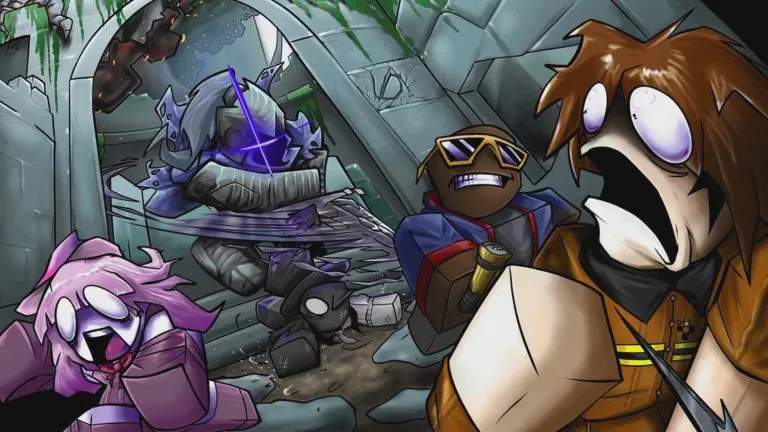
Pallets are the limited stun
The official description says pallets are scarce and limited, and that they stun the killer so you can leave a chase. Guides agree on the habit: look at the loop before you are injured, hold the wall, vault to keep distance, and drop the pallet when the killer is close enough to hit it. Dropping early only removes the pallet. The killer breaks it later for free.
A check spot is a corner of a loop where you can see both sides and the killer's red stain before you commit. Use it instead of guessing.
Loud actions
Survivor tip videos list loud notifications for a failed generator or heal skill check, an unhook, a pallet dropped while you are not in a chase, and a fast vault while you are not in a chase. Those sounds tell the killer where you are. Vault and drop when they are already chasing you.
Speed perks do not all stack
The perk writeup distinguishes Winded from always-available speed:
- Flow State raises vault speed and is described as not applying Winded, so it can sit beside other speed perks.
- Great Collapse is a 30% speed boost for 3 seconds after a pallet stun, and it applies Winded.
- Quick Recovery is a speed boost after a vault, and it also applies Winded.
- Time to Grow Up lengthens the speed boost you get after a hit.
If two of your perks both apply Winded, the second one will not be ready immediately after the first. Pair one Winded perk with Flow State or with a non-speed perk.
When to leave
If the loop has no pallet and no window, run to the next structure. Staying in a dead zone ends the chase. Killers are told the mirror rule: if you are still chasing at a strong structure while generators are popping, drop the chase and return to the machines.
Items that change a chase
A Parrying Dagger is described as a 3 second stun if the killer swings while it is active. Killers bait it, so use it at a vault or a pallet rather than in the open. A Flashlight is described as a 3 second blind aimed at the face, including after a pallet stun or during a vault, and it can make a killer drop a carried survivor. See items for the rest of the kit.